
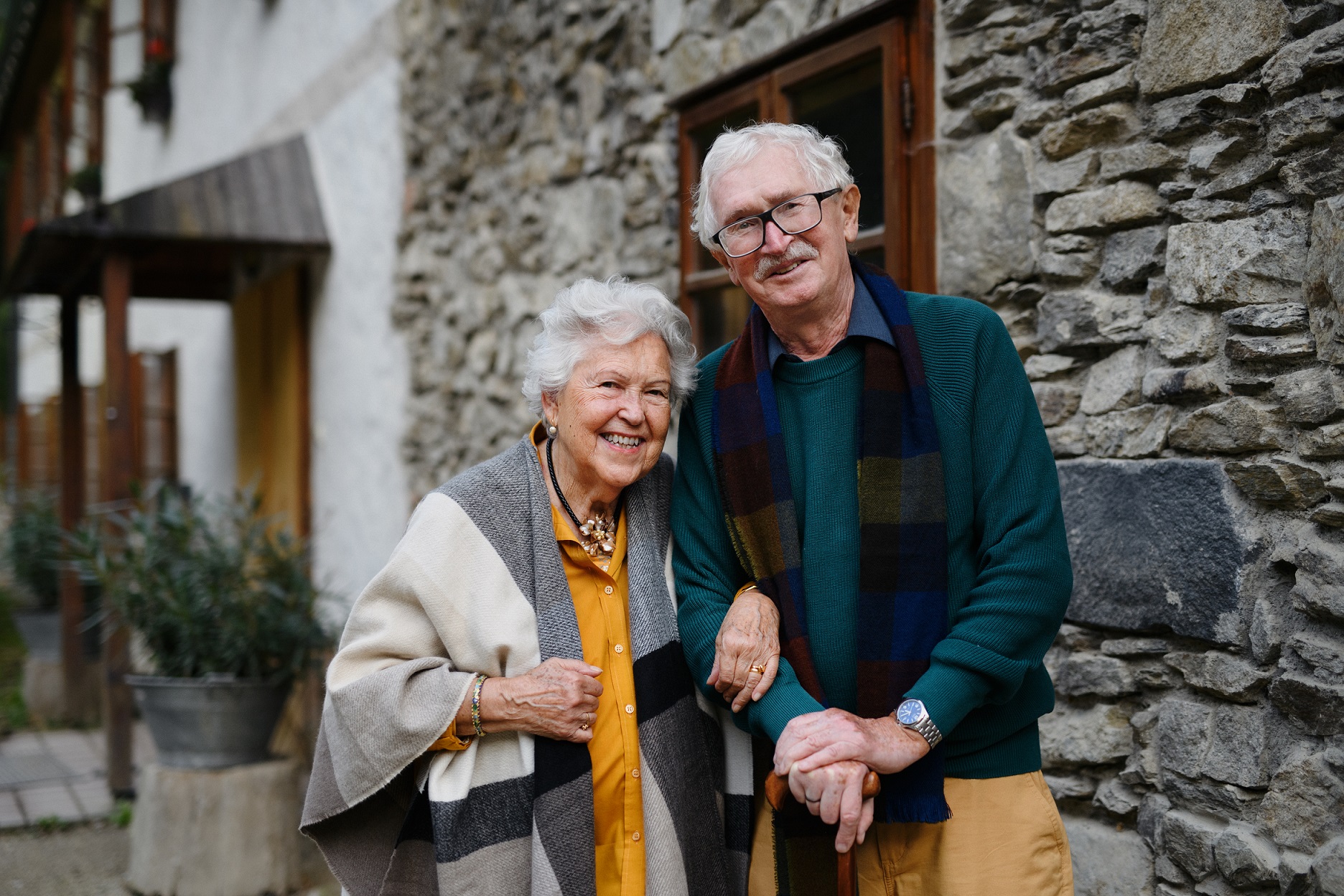
Here at the Blog, we’ve heard the term “SuperAgers” before. It turns out the notion of calling some seniors “SuperAgers” goes back at least a decade and a half, and it refers (as we’ll see below) to men and women in their eighties and beyond whose memory seems not to have diminished since they were 50 or younger.
Are these savvy seniors simply the ones who lucked out in the genetic sweepstakes? Or are there lessons from the SuperAgers that any of us can apply to help us not only live longer but also age well?
For some answers we’re turning once again to this archived article from the Washington Post, written by reporter Richard Sima. Few of these “lessons learned” about SuperAgers will come as a surprise, but it does add to a body of research showing how common-sense decisions we make today can pay cognitive dividends in the future. Who knows? Maybe you can one day join the ranks of the SuperAgers. Let’s take a look.
Showing Us What’s Possible as We Age
“These are like the Betty Whites of the world,” Emily Rogalski says. Rogalski should know: she’s a cognitive neuroscientist at Northwestern University’s Feinberg School of Medicine and associate director of the Mesulam Center for Cognitive Neurology and Alzheimer’s Disease.
She was also part of the research team that came up with the term “SuperAgers” 15 years ago.
What’s a SuperAger? It’s someone older than 80 whose memory is as good as, or better than, it was when they were 20 to 30 years younger. Sounds like a group worth joining.
Lessons from SuperAgers Can Benefit All Seniors
In his Washington Post report, Sima writes, “What researchers are learning from SuperAgers and about dementia prevention could allow us to discover new protective factors in lifestyle, genetics and resilience for common changes that arise with aging.” Rogalski adds, “It’s invigorating to know that there are good trajectories of aging. It’s possible to live long and live well.”
What Those “Good Trajectories of Aging” May Include
Rogalski says that there are three major trajectories of aging’s effect on our cognition: the pathologic, the normal, and the SuperAger. Pathologic is the term for cognition that deteriorates faster than expected, as in the case of dementia.
Sima writes, “A [2025] report from the Alzheimer’s Association estimates that 1 in 3 Americans older than 85 have Alzheimer’s disease, the most common form of dementia. More hopefully, research has uncovered many of the different risk factors that can be mitigated with lifestyle changes.” What’s more, a growing body of research indicates that a high percentage of dementias may be preventable.
The normal or average trajectory is usually that memory and cognitive abilities can begin to decline around your 30s and 40s. Rogalski adds that by the time most people are 80, memory tests show that they remember about half as much as they could when they were 50. “Despite being less sharp, older people following this trajectory are still able to function — and thrive — in everyday life,” she says. There is, however, a lot of individual variability.
The Third Trajectory: the SuperAgers
That variability is what led researchers to discover the third trajectory, the SuperAgers, who are as mentally acute past their 80s as others are in their 50s and 60s. It is not known what percent of the general population qualifies as SuperAgers, but they appear to be rare, Rogalski says. Even when researchers tried to screen only participants who believed they had good memory, less than 10 percent met the definition.
In order to crack the code of what makes SuperAgers different, researchers followed those enrolled, examined their health, imaged their brains, recorded their life histories, and asked them to donate their brains to science after death.
SuperAgers Display an Uncommon Degree of Resiliency
“The word I would use to describe this group is resilient,” Rogalski says. Many SuperAgers endured hardship, including extreme poverty, losing family at an early age, or surviving Holocaust concentration camps.
SuperAgers also seem to be very community-focused, with strong positive social relationships that require a degree of adaptability to interact with those in different age groups. One SuperAger lives with his daughter and grandchildren, who do not know much about Frank Sinatra or Franklin Delano Roosevelt, Rogalski says.
Instead, the SuperAger asks his grandchildren about their interests: Taylor Swift and Chance the Rapper. He laughs at this and finds joy in trying to keep up with what his grandkids are interested in instead of seeing that as too far of a reach or a burden — an admirable outlook.
SuperAgers Have Particularly Healthy Brains
In normal circumstances, the brain typically shrinks with age. This is especially true in the cortex, the more evolutionarily recent part of the brain. But this isn’t what happens with SuperAgers; their brains appear more youthful in areas associated with memory and executive abilities.
In some fairly deep technical language, Sima explains some basics of brain physiology. We’ve paraphrased a bit for clarity but encourage you to see the original article for details.
For example, he writes, in the “frontal brain region important for many cognitive functions, including attention and memory, SuperAgers had a thicker cortical layer compared with cognitively normal 80-plus-year-olds and even 50-year-olds. SuperAgers also had larger, healthier neurons in another brain area critical for memory, compared with both their older and 20-to-30-years-younger counterparts.”
Simultaneously, SuperAger brains appear to have more protection against the biological hallmarks of Alzheimer’s, “with less amyloid beta plaques, a cellular waste product, and neurofibrillary tangles,” Sima writes.
Adopting the Lifestyles of the SuperAgers
While becoming a SuperAger probably relies on genetics as much as any other single factor, there are many lifestyle adjustments that we can cultivate for better brain health. “Stop being a dementia worrier, start being a prevention warrior,” says neuropsychiatrist and author Mitchell Clionsky. The active approach to this is what’s going to make the difference.
And it is never too late to address the risk factors we can change, Emily Clionsky (Mitchell’s wife and co-author) adds. The average age of her patients who saw benefits was the mid-70s. My oldest patient was over 100, she says.
Basic Advice to Improve Our Odds of Being a SuperAger
Sima provides the following factors for a healthier brain, which we have included word-for-word from his article. You should eat like a centenarian by incorporating fiber-rich foods and nuts into your diet. It is also essential to exercise your body. Most people know the importance of getting up and moving, yet don’t always follow through.
I tell them to examine their “but,” Mitchell Clionsky says. Figure out what is getting in the way of exercising and ask “how do we break it down into something you will do.” You must also exercise your brain. The brain loves a challenge, so do activities that engage your noggin.
Stay connected, as social isolation and loneliness are risk factors for dementia, while social contact is protective. Finally, foster resilience. When something bad occurs, try to embrace the challenge. What in this can be a learning moment? What in this can be a turning point, Rogalski says?
Sima concludes his article with this wonderfully positive quote from Rogalski: “I think there’s the possibility to set new expectations in aging and to revalue rather than devalue older adults.” Sounds encouraging. Here’s to the SuperAgers pointing the way.
Rajiv Nagaich – Your Retirement Planning Coach and Guide
Rajiv Nagaich’s newest program on PBS, called Designing Your Ideal Future, is bringing Rajiv’s powerful message to Americans from coast to coast. This engaging and challenging PBS show is prompting thousands to take a fresh look at the type of planning that will help them succeed in retirement.
In this one-hour PBS special, Rajiv Nagaich takes viewers step-by-step through the principles of creating a retirement plan that truly supports the life you want to live. Instead of generic check-the-box paperwork, Rajiv reveals how to infuse your perspective — your values, goals, and priorities — into every legal document and life plan component so your plan becomes a living system for your future.
Designing Your Ideal Future includes insights from real-world planning examples and a live Q&A with Rajiv Nagaich that answers viewer questions about retirement planning, legal readiness, and family communication. It’s perfect for anyone approaching retirement, currently retired, or responsible for a loved one’s future care — and for those who want a clear, effective approach to planning that prioritizes personal choice and quality of life.
Taking Action for Your Future
What about you? You’ve heard Rajiv say it repeatedly: 70 percent of retirement plans will fail. If you know someone whose retirement turned into a nightmare when they were forced into a nursing home, went broke paying for care, or became a burden to their families — and you want to make sure it doesn’t happen to you — then these materials are your key to retirement success.
Visit your local PBS station’s schedule to find airtimes and learn how to access companion resources — including a free Legal Readiness Quiz and tools to help build your complete LifePlanning system. Don’t remain among the millions of Americans sleepwalking their way into a retirement they never wanted.
Instead, your retirement can be the exciting and fulfilling life you’ve always hoped it would be. Start by watching, reading, and sharing Rajiv’s important message. And remember, Age On, everyone!
The post Understanding the Habits of SuperAgers for Better Brain Health appeared first on Home.
