
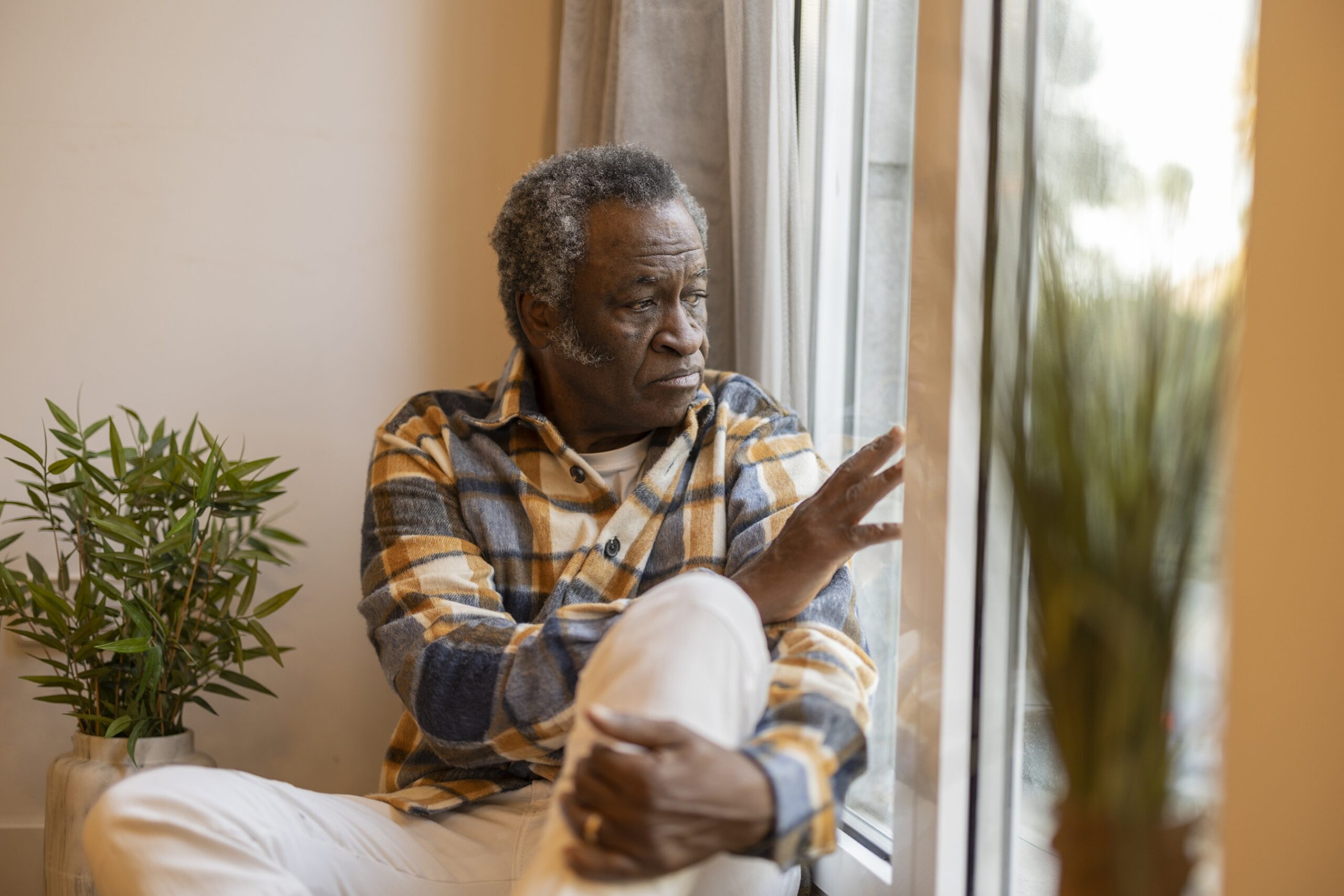
When we think of growing older in America, we typically think of people aging as a couple. For most seniors, that image is true: the majority of U.S. adults are aging in the company of a spouse or partner. But roughly 20 percent of adults 50 and older are “solo agers,” living and growing older by themselves.
This week on the Blog, we’re examining various aspects of solo aging and what it means to grow old in America on your own. Toward that end, in this article we’re taking a “big picture” look at a report on solo aging from AARP, published last fall. AARP examined current stats on solo aging and also interviewed several men and women growing older alone.
What AARP discovered was a mixed bag – some clear advantages in favor of solo aging, plus some significant drawbacks and concerns. The AARP article is long, so we’ve cherry-picked some of the information to include here.
Widow of 19 Years Says, “I Like My Own Company”
The AARP report begins with 102-year-old, Mildred Kirschenbaum of Boca Raton, Florida, who became a social media sensation at age 99 for her “tart advice about aging.” Her preferences are clear.
“I want to be alone,” the retired travel agent told AARP. “I like my own company.” As the AARP article adds, “Recent health issues have challenged her independence — but not completely. She stopped driving this year, but she did renew her driver’s license.”
24 Million Americans are Aging Alone
According to AARP, Kirschenbaum “represents a growing trend in America of people from different backgrounds and circumstances who are aging solo.”
The size of this cohort is surprising. “Twenty-one percent of U.S. adults age 50 and older — that’s 24 million people — now live alone, without a spouse or partner or anyone else under the same roof,” says AARP. “And their numbers are growing fast.”
As might be expected, the numbers also shift dramatically with age. By the time seniors age past 75 years old, half of their 75-plus peers will be growing old on their own, according to U.S. Census data. Harvard University estimates that, by 2038, the majority of people age 80 and older — about 10 million — will be solo agers.
Shift Toward Solo Aging is “Unprecedented”
The AARP reporters spoke with Elene Portacolone, sociology professor at the University of California, San Francisco. She called the upswing in solo aging “unprecedented.”
“It’s a reality check that times have changed,” she says. “For many, it’s about living your own life, following what is important to you. But our social supports have not kept up with the needs of those aging alone.”
Dr. Portacolone cited “big changes in how Americans live, love and age” as a partial explanation. Marriage rates are declining while the rate of so-called gray divorces is rising. People have smaller families with greater geographical separation. People are also living longer and staying in their own homes to a greater degree, fueling a sense of independence.
Solo Agers Enjoy Significant Benefits but Face Greater Vulnerabilities
According to AARP, adults aging alone don’t fit neatly into any stereotype. “Despite their numbers,” the article states, “solo agers are often misunderstood and even invisible.”
Dr. Sachin Shah of Harvard Medical School said there are benefits to aging independently. “Older adults who live alone are generally healthier, more cognitively capable and more socially connected than the broad group of older people living with their spouse or adult children — because they have to be,” he says.
But there’s also a clear downside. Dr. Shah adds, “The other side of the coin is, they’re more vulnerable when anything happens because they don’t always have the support of others.”
AARP Survey Finds Surprising Strengths, Fundamental Challenges
To find out more about seniors aging independently, AARP conducted an extensive survey of more than 500 solo agers from across the U.S. The sample included all economic groups and lifestyles. Here in abbreviated form are five insights into the lives of this growing group.
Insight #1: Solo Agers Value Freedom and Autonomy
“One thing most agreed on: Living on your own can be exhilarating and deeply satisfying,” says the article. As one respondent put it, “There can be a lot of joy in aging solo. Feeling the freedom to choose their own path, solo agers are the captains of their own ship. They can pursue their own interests. There’s a lot of positivity.”
Insight #2: Friendships Take On New Meaning
For this article, AARP spoke with Fordham University Professor Shellae Versey. She followed nearly 900 African American female solo agers as part of a larger 2025 study. Her findings were striking and somewhat counterintuitive: these solo women were actually less likely to feel lonely than women in the general population with partners.
“People still have the idea that getting older means being lonely, and that solo living would be associated with worse health, perhaps especially for Black women,” Versey told AARP. “But if you’re still working, or you’re going to a bridge group or the local library or community garden, if you’re seeing people you know at the coffee shop and the grocery store, that’s very different from being isolated with nobody checking on you.”
Among AARP’s survey respondents, two-thirds said spending time with friends brings them joy, and half termed their social life “good” or “excellent.” This is especially true of women, says the survey, since they prioritize social connections more than most men do.
Insight #3: Solo Agers Value Friendship – but Not Necessarily Romance
As the AARP survey points out, loneliness is still a problem with solo agers. About 40 percent of respondents said that the worst parts of aging alone were isolation and loneliness. Yet while most solo agers seek out friendships, fewer are looking for romantic connections.
AARP quotes national research that shows barely one-quarter of single older women and 43 percent of single older men are interested in dating. A 2023 Pew Research Center survey reveals that the use of dating apps among seniors is negligible at roughly 5 percent or less.
Instead of looking for love, many solo agers are seeking significance. “One in 4 AARP survey respondents found joy in volunteer work, and 1 in 5 are involved in their communities,” the article reports.
Insight #4: People Aging Alone Need a Solid Social Network
As one might expect, the greatest drawback to aging alone is day-to-day isolation. From regular chores to emergency care, solo agers worry that there’s no one to provide help.
Emory University Professor Jane Lowers told AARP that, without a strong network of family, friends, neighbors and other caregivers, solo agers can face increasing difficulties. “People aging solo are less likely to get all their care needs met as they get older, whether it’s help with transportation, household chores, basic health needs or mobility,” Lowers says. “Those little needs can stack up. If you can’t get to the doctor, medical conditions or even vision or hearing problems may go undiagnosed.”
Insight #5: Finances Represent a Major Area of Concern
Financial worries ranked high in the AARP survey.
“More than half of 50- to 64-year-olds described their financial situation as fair to poor, as did nearly 40 percent of those 65 and older,” says the article. The burden of financial planning and preparedness must be shouldered alone.
As a result, solo agers may be disproportionately poorer. “Without a partner’s income and assets,” says AARP, “63 percent of older adults in poverty in 2021 were solo agers, according to the U.S. Census. Since they don’t share the costs of housing and utilities with a partner, solo agers are twice as likely to say their money doesn’t stretch to cover basic needs.”
Paul Downey, former CEO of a group called Serving Seniors in San Diego, says low-income solo agers are especially vulnerable. “We see people who did everything right,” Downey told AARP — “they worked and saved — but something happens. Sometimes an illness comes along and uses up their life savings. Or their spouse has an illness, then dies or moves into a skilled nursing facility.” Too often, the result is a housing crisis.
Prepare Yourself for Solo Aging
The AARP article concludes with advice from Sara Zeff Geber, author of Essential Retirement Planning for Solo Agers. She offers these suggestions in three areas important to solo agers. We’re including Geber’s advice verbatim from the original AARP article. Geber writes:
FINANCIAL
Live within your means. Create a budget in which your expenditures do not exceed your income. Working with a nonprofit credit counselor, a financial planner who works on an hourly basis or another financial adviser can provide insight and guidance.
Continue working as long as you can. In doing so, you will delay tapping into your savings, and your Social Security payment will continue to increase until it reaches its maximum at age 70. In addition, you can bank more money for future expenditures.
Plan for long-term care. If you do not have long-term care insurance or sufficient savings to cover future care, ask your financial adviser what you need to do now to qualify for government-funded long-term care in your state later on.
LEGAL
Appoint a health care proxy. Authorize someone to make medical decisions for you if you are ever unable. Consider family members, a younger friend, the child of a close friend, a professional fiduciary or a private guardian. Once you’ve chosen a proxy, have a detailed discussion about that person’s role and your expectations.
Give someone you trust a financial power of attorney. This lets that person — a relative, friend or professional — manage your finances if you can’t. Ensure that they have access to the passwords for your accounts. If it’s not the same person as your health care proxy, make sure the two will be able to work together. And remember: These are the key documents solo agers need to avoid court-appointed guardianship or conservatorship.
Don’t forget your pets. Name a proxy to care for them when you are no longer able. You won’t want them to end up in the county animal shelter.
SOCIAL
Decide where you will live. Explore options such as home-sharing with a friend and senior living communities. Think about proximity to transportation, health care and shopping.
Stay connected and engaged. Get together often with friends and neighbors. Continue working or volunteer your time and talent to a cause you believe in.
Practice good habits for your health. Choose doctors and dentists who respect your autonomy. Participate actively in decisions about medications, vaccines and screening tests. Have your ears and eyes tested regularly. Consider joining a gym for both fitness and social interaction.
Rajiv Nagaich – Your Retirement Planning Coach and Guide
Rajiv Nagaich’s newest program on PBS, called Designing Your Ideal Future, is bringing Rajiv’s powerful message to Americans from coast to coast. This engaging and challenging PBS show is prompting thousands to take a fresh look at the type of planning that will help them succeed in retirement.
In this one-hour PBS special, Rajiv Nagaich takes viewers step-by-step through the principles of creating a retirement plan that truly supports the life you want to live. Instead of generic check-the-box paperwork, Rajiv reveals how to infuse your perspective — your values, goals, and priorities — into every legal document and life plan component so your plan becomes a living system for your future.
Designing Your Ideal Future includes insights from real-world planning examples and a live Q&A with Rajiv Nagaich that answers viewer questions about retirement planning, legal readiness, and family communication. It’s perfect for anyone approaching retirement, currently retired, or responsible for a loved one’s future care — and for those who want a clear, effective approach to planning that prioritizes personal choice and quality of life.
What About You?
You’ve heard Rajiv say it repeatedly: 70 percent of retirement plans will fail. If you know someone whose retirement turned into a nightmare when they were forced into a nursing home, went broke paying for care, or became a burden to their families – and you want to make sure it doesn’t happen to you – then these materials are your key to retirement success.
Visit your local PBS station’s schedule to find airtimes and learn how to access companion resources — including a free Legal Readiness Quiz and tools to help build your complete LifePlanning system.
Don’t remain among the millions of Americans sleepwalking their way into a retirement they never wanted. Instead, your retirement can be the exciting and fulfilling life you’ve always hoped it would be. Start by watching, reading and sharing Rajiv’s important message.
And remember, Age On, everyone!
The post AARP:Solo Agers Enjoy Benefits, Face Risks of Aging Alone appeared first on Home.
